
Durga Devi Zone Safari Booking: Jungle Safari & Price Guide
In short: Durga Devi is a core tourism zone in the northeastern corner of Jim Corbett National Park, entered via Durga Devi Gate. Reported distance from Ramnagar varies quite a bit across sources — anywhere from roughly 20 km to 36 km — so treat any single figure as approximate and confirm your actual route when you book; it is generally regarded as the farthest of the park's day-visit zones from Ramnagar town. It sits along the Ramganga River and is best known for birding, wild elephants, and Mahseer fish in the river, rather than as a top tiger zone. Safaris run in two daily shifts during the open season (roughly mid-October/mid-November to mid-June — exact dates are set by the Forest Department and shift slightly year to year), with a maximum of 6 visitors per jeep. A Durga Devi jungle safari booking is priced per jeep, and typically costs a little more than the closer zones because of the extra distance.
Where Durga Devi Zone Sits Inside Jim Corbett
Durga Devi Zone lies on the northeastern boundary of the Corbett Tiger Reserve, at the edge of the Lansdowne forest range. Entry is through the Durga Devi Gate, roughly 28 km from Ramnagar — making it the farthest of Corbett's day-visit safari zones.
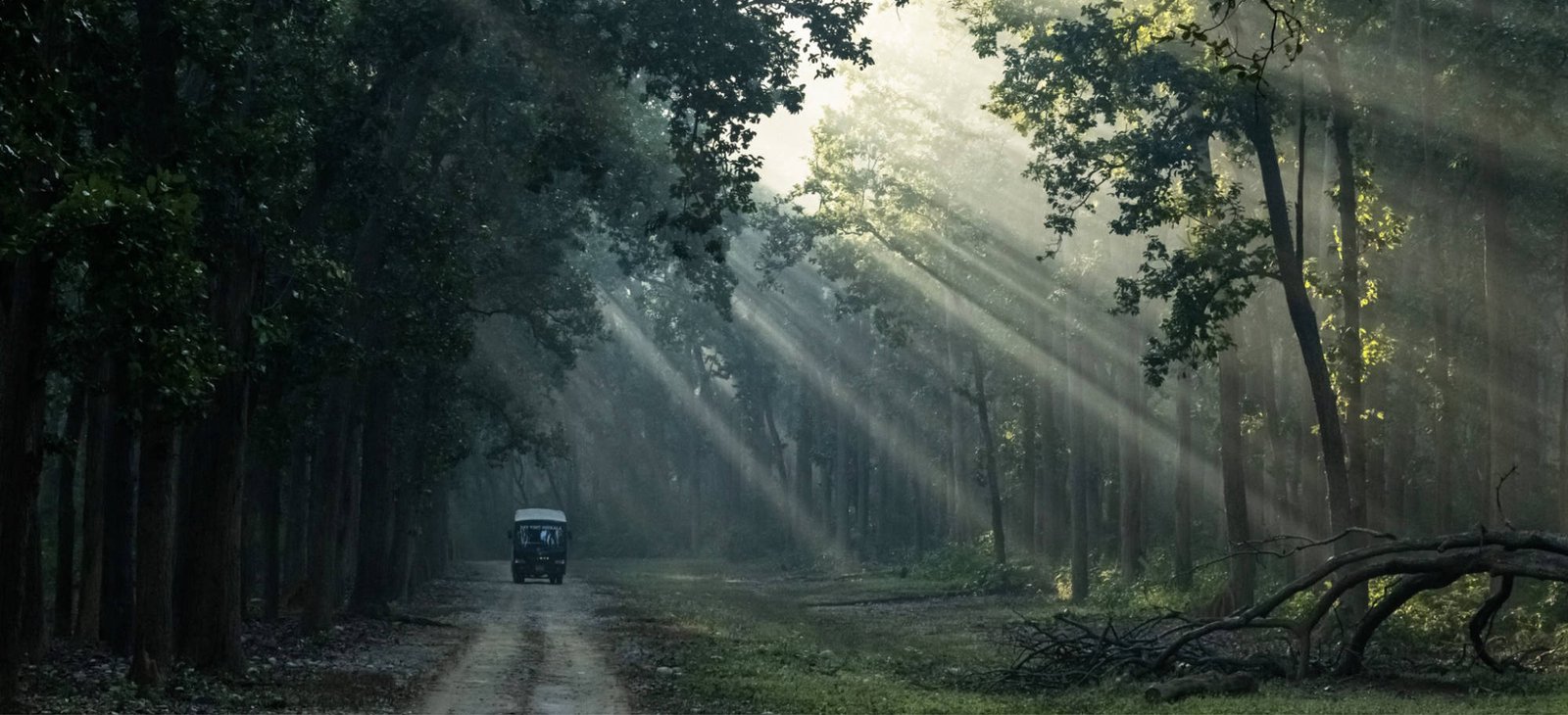
The terrain is hilly and undulating rather than flat grassland, and the zone hugs the banks of the Ramganga River, giving it a distinctly different character from Bijrani or Jhirna — quieter, greener, and shaped as much by water and birdlife as by big cats.
Why Choose the Durga Devi Jungle Safari
- A birder's zone first — species like the grey-headed fishing eagle, black-chinned yuhina, crested laughing thrush, and maroon oriole are regularly recorded here.
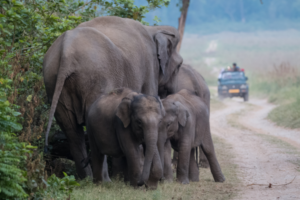
- Strong elephant presence — Durga Devi has one of the higher wild elephant populations among Corbett's zones, visible through most of the season.
- A river-and-hill landscape — Sal forest, riverine belts, and undulating hills along the Ramganga River.
- Mahseer fish sightings — the Ramganga's river channels here are known for this prized native fish.
- Fewer crowds — its distance from Ramnagar keeps visitor numbers lower than Bijrani or Jhirna, for a quieter safari.
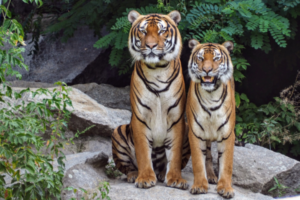
- Honest expectation: tiger sightings are possible but less frequent here than in Bijrani — go for the birds, elephants, and scenery, and treat a tiger sighting as a bonus.
Best Time to Visit Durga Devi Zone
Winter
The peak season for Corbett overall — cool, clear, and comfortable, with thinner foliage for better sightings.
Summer
Warmer, but wildlife (and birds) gather more predictably near the river and waterholes.
Monsoon (Closed)
Durga Devi shuts for day visits — heavy rainfall and landslide risk on the hilly terrain make it unsafe.
Exact Safari Shift Timings
| Season | Morning shift | Evening shift |
|---|---|---|
| Winter (Nov–Feb) | Entry ≈6:00–6:30 AM · Exit ≈9:30–10:00 AM | Entry ≈2:00–2:30 PM · Exit ≈5:30–6:00 PM |
| Summer (Mar–mid Jun) | Entry ≈5:30–6:00 AM · Exit ≈9:00–9:30 AM | Entry ≈2:30–3:00 PM · Exit ≈6:00–6:30 PM |
Each shift runs roughly 3 to 3.5 hours. These are the ranges commonly notified by the Forest Department; exact gate-in times are notified closer to your travel date — confirm on corbettonline.uk.gov.in or when your Durga Devi safari booking is made.
Wildlife & Birds in Durga Devi Zone
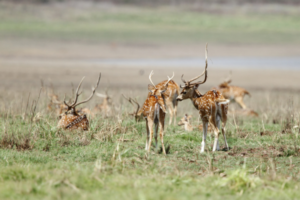
Durga Devi's mixed hill-and-riverine habitat supports a distinctive checklist compared to Corbett's grassland zones: wild elephants (in strong numbers), leopard, sloth bear, sambar, and spotted deer, alongside Mahseer fish in the Ramganga. But it's the birdlife that draws repeat visitors — the grey-headed fishing eagle, black-chinned yuhina, crested laughing thrush, slaty-blue flycatcher, and maroon oriole are all regularly recorded here, making it one of Corbett's best zones for serious birdwatchers and photographers.
Durga Devi Zone Safari Booking & Price
A Durga Devi jungle safari booking bundles your forest permit, gypsy hire, and naturalist guide into one per-jeep charge, similar to Corbett's other zones — though it typically runs a little higher than Bijrani or Jhirna because of the extra distance from Ramnagar.
Durga Devi Day Safari
Permit, gypsy (up to 6 visitors), naturalist guide, pick-up/drop from Ramnagar on request.
Durga Devi + Ramnagar Stay
Hotel stay near Ramnagar with a Durga Devi jeep safari, permits & guide, and transfers included.
Durga Devi + Bijrani Combo
Pair the birding-and-elephant strength of Durga Devi with Bijrani's higher tiger odds in one trip.
Safari cost: ₹8,000 per jeep for Indian nationals and ₹12,000 per jeep for foreign nationals.
Since the permit is charged per jeep, travelling as a full group of 5–6 gives the best per-person value. Book your Durga Devi jungle safari and we'll handle the permit, guide, and pick-up/drop.
Durga Devi vs Bijrani vs Jhirna: Which Zone Fits Your Trip?
| Zone | Best for | Open season | From Ramnagar |
|---|---|---|---|
| Durga Devi | Birding, elephants, river & hill scenery, fewer crowds | Mid-Oct – mid-Jun* | ~20–36 km* |
| Bijrani | Widely regarded as a strong tiger-sighting zone among day-visit options | 15 Oct – 30 Jun* | ~1–2 km |
| Jhirna | Year-round availability, good for last-minute plans | Open all year* | ~15–20 km |
If tiger sightings are your main goal, Bijrani is the stronger bet. If you'd rather spend a slower morning watching birds and elephants along a river, with far fewer jeeps around you, Durga Devi is genuinely one of Corbett's most rewarding zones — many travellers pair it with a Bijrani or Jhirna safari on the same trip to cover both experiences.
Permits, Rules & Occupancy
- A valid Forest Department permit is required — arranged through an authorised operator or booking portal.
- Maximum 6 visitors per jeep.
- Child occupancy and any age-based rule can change — share every child's age and confirm the current policy before booking.
- Carry the same government ID used at booking; it's checked at the gate.
- Both shifts generally need advance booking, especially in peak season (November–February) — confirm current slot availability before finalising travel plans.
- Stay inside the vehicle, keep noise down, and avoid flash photography near wildlife and nesting birds.
Where to Stay Near Durga Devi Zone
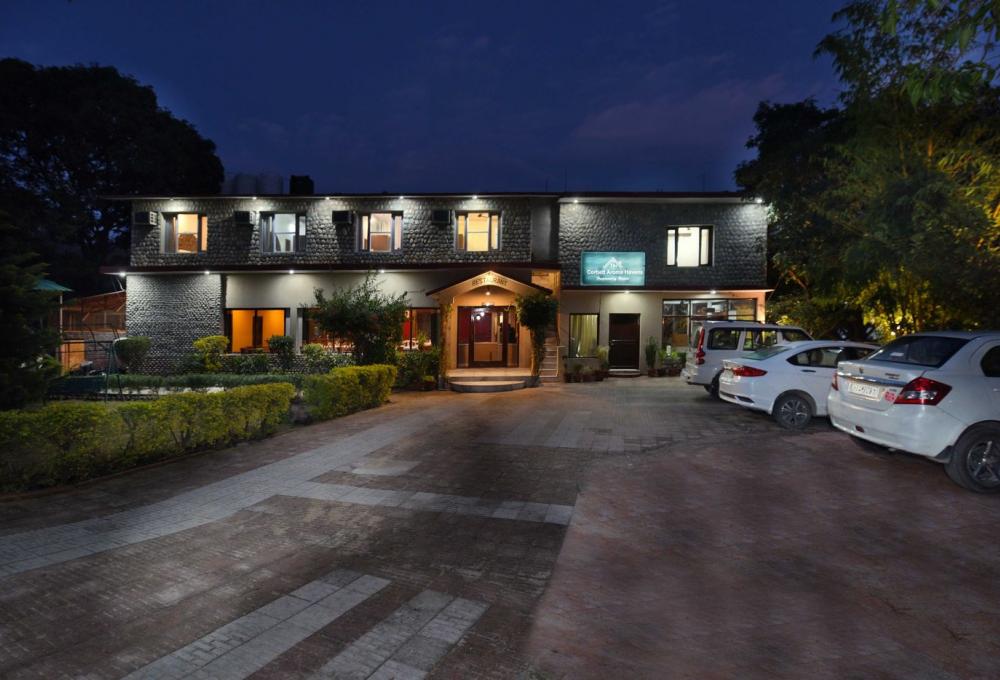
Inside the zone: a forest rest house at Lohachaur is associated with Durga Devi, though night-stay availability here is more limited than at Bijrani or Dhikala — ask us to confirm current availability before you plan around it.
Near Ramnagar: given the distance to the gate (reported at roughly 20–36 km depending on the source), most visitors base themselves in Ramnagar and drive in for the safari. Compare options on our hotels in Ramnagar page.

Frequently Asked Questions
How do I book a Durga Devi zone safari online?
Book through Corbett Package Tour — we arrange the forest permit, gypsy, and naturalist guide for your chosen shift. Contact us or use our online booking page with your travel dates.
What is the Durga Devi zone jeep safari price?
A Durga Devi jungle safari costs ₹8,000 per jeep for Indian nationals and ₹12,000 per jeep for foreign nationals.
How far is Durga Devi zone from Ramnagar?
Sources report different figures, ranging from roughly 20 km to 36 km, entered via Durga Devi Gate. It's consistently described as the farthest of Corbett's tourism zones from Ramnagar town — confirm the exact distance for your specific route when you book.
Is Durga Devi zone good for tiger safari?
Tiger sightings are possible but less frequent here than in Bijrani. Durga Devi is better known for birding, wild elephants, and its river-and-hill scenery — it's a strong choice if you want a fuller wildlife and birding experience rather than a tiger-focused trip.
Which zone is best for bird watching in Jim Corbett?
Durga Devi is widely considered one of Corbett's best birding zones, with species like the grey-headed fishing eagle, black-chinned yuhina, crested laughing thrush, and maroon oriole regularly recorded along the Ramganga River.
Can we stay overnight in Durga Devi zone?
There's a forest rest house associated with the zone at Lohachaur, but night-stay availability here is more limited than at other zones — check current availability with us before planning an overnight stay.
What is the best time to visit Durga Devi zone?
November to February is the most comfortable season overall, while summer (March–mid-June) often brings more predictable wildlife activity near the river. The zone is typically closed from mid-June to mid-October for the monsoon, though exact dates can shift by a few days each year — confirm before booking.
What are the exact Durga Devi safari shift timings?
In winter (roughly November–February) the morning shift typically runs about 6:00–6:30 AM to 9:30–10:00 AM, and the evening shift about 2:00–2:30 PM to 5:30–6:00 PM. In summer (March–mid-June), morning runs about 5:30–6:00 AM to 9:00–9:30 AM and evening about 2:30–3:00 PM to 6:00–6:30 PM. Always confirm the exact entry time for your travel date on the official booking portal.
How many people are allowed in a Durga Devi safari jeep?
A maximum of 6 visitors per jeep. Child occupancy and any age-based rule can change — share every child's age and confirm the current policy before booking.
What is the difference between Durga Devi and Bijrani zone?
Bijrani, closest to Ramnagar, is widely regarded as one of Corbett's stronger day-visit zones for tiger sightings. Durga Devi, considerably farther out on the northeastern boundary, trades tiger odds for birding, elephants, and a quieter river-and-hill landscape. Many travellers combine both on one trip.
Ready to Book Your Durga Devi Jungle Safari?
Let us handle the permit, gypsy, and guide — you just bring your binoculars and camera.